Bangkok Floating Market Prices: Complete Budget Guide
Planning your visit to Bangkok's floating markets requires understanding the various costs involved, from transportation and boat rides to food and souvenirs. This guide sets out the prices that operators, the Tourism Authority of Thailand and the travel guides actually publish — boat hire, food and transport leg by leg — so you can price the market you have chosen from its parts. It deliberately gives you those components rather than a single all-in total, because a total is only as good as its weakest leg.
💴 Prices checked October 2026
Boat, food and tour prices on this page are the operator's or Tourism Authority of Thailand's published prices; where only one source exists the text says so. Transport legs that no operator publishes are labelled with the guide or observation they come from. Dollar figures are approximate conversions at USD 1 = THB 33.8150, the Bank of Thailand reference rate of 28 October 2026.
Entrance Fees: No Admission Ticket at These Markets
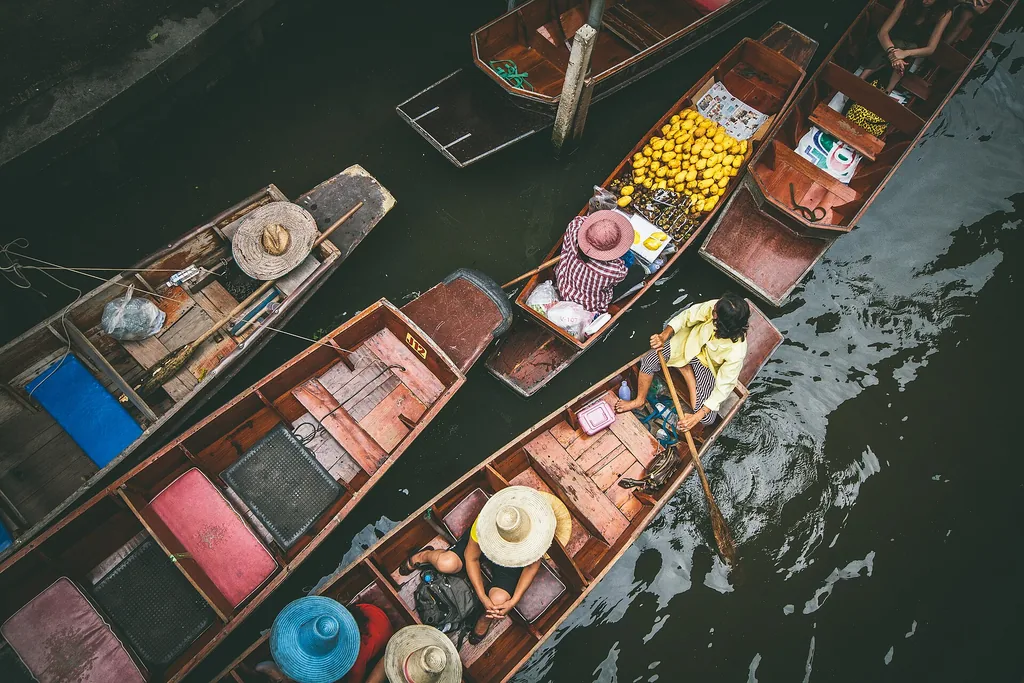
The excellent news for budget-conscious travelers is that none of the markets listed below sell admission tickets. You can freely walk around and explore any of them without buying a ticket at the gate; boat hire, food and transport are what you actually pay for.
Free entry markets include:
- Damnoen Saduak Floating Market
- Amphawa Floating Market
- Taling Chan Floating Market
- Don Wai Floating Market (Nakhon Pathom) — weekday 08:00–17:00, weekend 07:00–18:30 (TAT)
- Khlong Lat Mayom Floating Market
- Bang Nam Phueng Floating Market
Boat Ride Costs: Your Biggest Floating Market Expense
Boat rides represent the largest expense at floating markets, with prices varying significantly based on market location, boat type, and your negotiation skills.
Damnoen Saduak Boat Prices
As Bangkok's most famous floating market, Damnoen Saduak offers various boat options with correspondingly different price points.
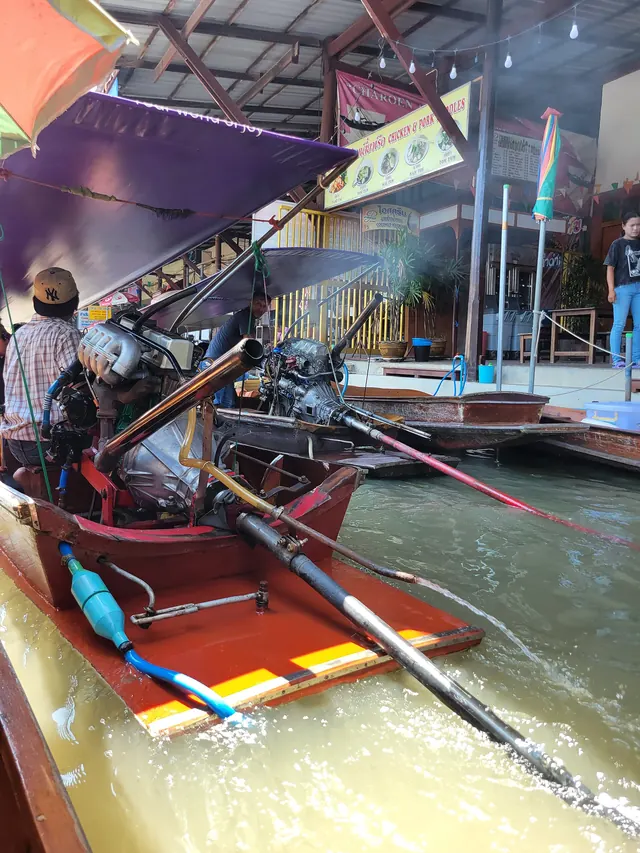
Private paddle / rowing boat: 300-500 THB per boat (about 30-60 minutes)
Motorboat (engine-powered): 600-1,000 THB per boat for 1 hour
Hire at the official market pier: touts at the out-of-town car parks quote 2,000-3,000 THB — that is the tourist-trap price, not the market rate.
Money-saving tip: Row boats provide authentic experiences at half the cost of motorboats, though they move more slowly through the canals. Shared boats offer excellent value when traveling with others.
Amphawa Floating Market Boat Costs
Amphawa offers exceptional value for boat experiences, particularly considering the weekend evening atmosphere and sunset views.
Market canal tour (shared boat): 50 THB (about $1.50 USD) per person for about 1 hour
Private boat charter: 500 THB (about $14.80 USD) for the entire boat, the operator's published starting price
Temple tour: 50 THB per person, about one hour, temples included, at the operator's published price
The temple tour provides extraordinary value, combining cultural experiences with extensive canal exploration at budget-friendly pricing. The 50 THB canal boat is the shared boat; a private or loop tour of the same canals is priced higher.
Other Market Boat Pricing
Taling Chan Floating Market: 60 THB per seat for the one-hour Wat Ko loop. The longtail on to Khlong Bang Luang costs about 200 THB, on one guide's figure.
Food and Dining Costs
Floating market food prices vary between tourist-focused and locally-oriented vendors, with significant savings available for informed travelers.
Traditional Floating Market Foods
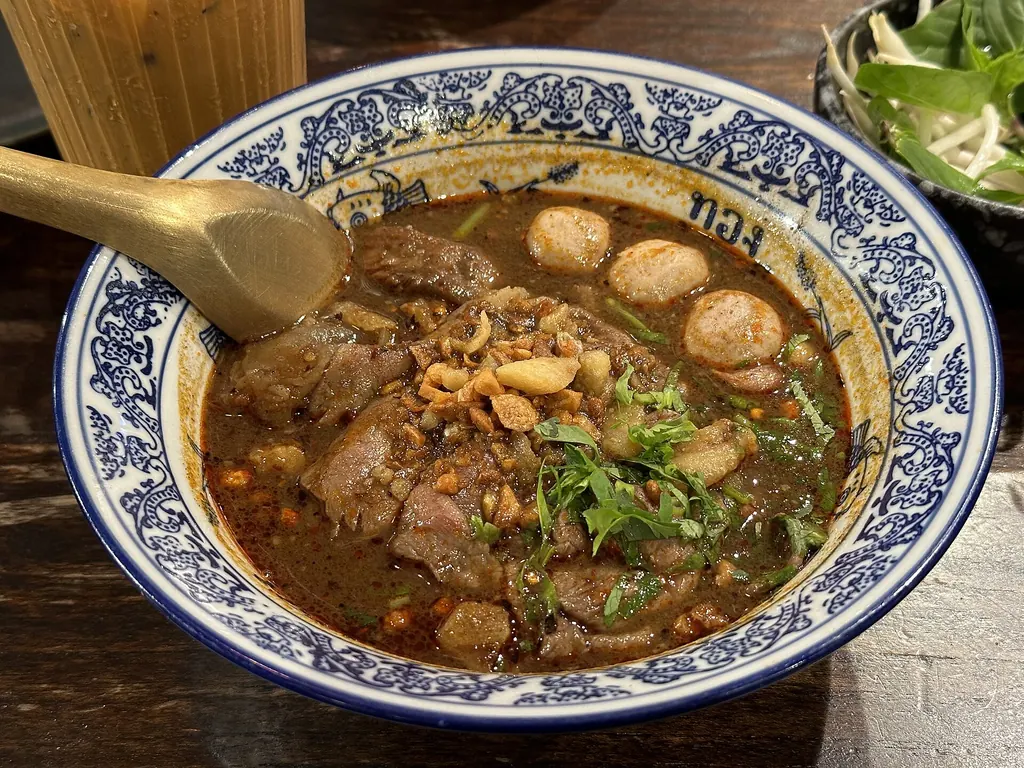
Boat noodles (kuaitiao reua): about 50 THB (about $1.50 USD) a bowl at the operator's own quoted price, and you usually eat two or three
These iconic dishes feature rich, blood-thickened broths served from boats with various noodle types and meat options.
Coconut ice cream:
Freshly made and served in coconut shells, this cooling treat is perfect for Thailand's tropical climate.

Street Food and Snacks
Thai street food plates: expect around 50-70 THB (about $1.50-2.10 USD) for a plate from a boat, on one observed purchase - Thais pay less, 50 THB against 70 THB for foreigners
Including pad thai, grilled meat skewers, spring rolls, and traditional Thai desserts.
Fresh tropical fruits, pre-cut: 50-100 THB (about $1.50-3.00 USD) a portion
Vendors sell pre-cut fruits like mango, pineapple, and dragonfruit in convenient portions. Read that as a portion of food or fruit, not a per-fruit tariff: the only published figure available is filed under "food (pasta/fruit)".
Beverages:
Thai iced tea, fresh coconut water, and fruit juices are widely available.
Transportation Costs to Floating Markets
Transportation represents your second-largest expense, with options ranging from ultra-budget public transport to premium private services.
Budget Public Transportation
To Damnoen Saduak:
BTS Skytrain to Bang Wa: 17-65 THB depending on where you board (17-45 THB if you start at Wongwian Yai)
Bus No. 78 from the Southern Bus Terminal: about 50-80 THB. The air-conditioned bus was 64 THB when a travel guide tested it, and no official tariff is published
Motorbike taxi to the market: 10-20 THB, on one guide's figure, or walk it in about 10 minutes
To Amphawa:
Minivan to Amphawa: about 90-100 THB one way, reported by one published guide; no operator tariff is published
Private Transportation
Taxi/Grab to Damnoen Saduak: 1,000-1,500 THB (about $30-44 USD) one way as quoted by taxi and tour services; a metered ride or Grab has been reported at 600-1,000 THB (about $18-30 USD). Neither is a published tariff.
Taxi/Grab to Taling Chan: about 150-200 THB (about $4.50-6 USD) from central Bangkok, on one guide's figure
Private transportation becomes cost-effective for groups of 3-4 people when total costs are shared among travelers.
Organized Tour Transportation
Budget half-day tours: from about 800-900 THB (about $24-27 USD), typically 900-1,500 THB (about $27-44 USD) per person with transport and boat, on the operator's own price table
Full-day combination tours: about 800-2,000 THB (about $24-59 USD) per person covering multiple markets - the span of the agent and operator prices checked, not one quoted fare
Money-Saving Strategies
Timing Your Visit for Better Prices
Early arrival (7:00-8:00 AM): Boat operators are more willing to negotiate before peak tourist hours. You'll also experience authentic market atmosphere before crowds arrive.
Weekday visits: Some markets offer lower prices on weekdays due to reduced demand, though weekend markets like Amphawa operate only Friday-Sunday.
Negotiation Techniques
Group bargaining: Join other travelers to share boat costs and increase negotiating power
Cash payment: Bring small denominations (20, 50, 100 THB notes) for easier transactions and better negotiation positions
Compare vendors: Walk around markets before committing to specific boat operators or food vendors
Cost-Effective Food Strategies
Eat where locals eat: Vendors serving Thai customers typically offer authentic food at lower prices
Share large dishes: Many floating market specialties serve 2-3 people, making sharing cost-effective
Avoid tourist-focused vendors: Vendors near main boat docks often charge premium prices compared to those in market interiors
Hidden Costs to Avoid
Tourist Trap Pricing
Overpriced boat tours: Some operators charge 3,000+ THB per person for basic experiences available elsewhere for 300-500 THB. Watch the units: the overcharge is quoted per person, and the boat prices on this page are per boat.
Unexpected Expenses
Parking fees: At Amphawa, paid parking run by local residents is typically around 40 THB, on one guide's figure, and it isn't always advertised
Return transportation: Budget for return journey costs, which may be higher during peak evening hours
Currency and Payment Considerations
Cash-Only Environment
Floating markets operate primarily on cash transactions. Credit cards are rarely accepted, and ATMs may be limited or unavailable at smaller markets.
Recommended cash: size it against the boat and food prices above rather than a fixed total - carry enough for the boat you actually want and your meals, and keep it in small notes.
Small Denominations Strategy
Exchange money for small bills before your visit. Vendors often lack change for large bills (500 or 1,000 THB notes), and this can affect your ability to negotiate or make quick purchases.
Seasonal Price Variations
Peak Season (November-February)
Thailand's cool, dry season brings increased tourism and correspondingly higher prices for tours and transportation, though market food prices remain relatively stable.
Low Season (May-October)
Rainy season offers potential savings on tours and transportation, though weather unpredictability may affect market operations. Some vendors may offer discounts to attract fewer tourists during this period.
Value Comparison Between Markets
Best Value for Money
Amphawa Floating Market: Offers exceptional value with its shared canal boat at 50 THB per person, authentic atmosphere, and weekend evening charm
Taling Chan Floating Market: Closest to Bangkok, with the one-hour Wat Ko loop priced per seat
Premium Experience Worth the Cost
Damnoen Saduak: Higher prices reflect its iconic status and comprehensive facilities, justifiable for first-time floating market experiences
Hidden Gem Pricing
Bang Nam Phueng: Authentic local pricing with minimal tourist markup, offering genuine Thai market experiences
Planning Your Floating Market Budget
Successful floating market visits balance cost consciousness with experience quality. Consider these factors when planning your budget:
Group size: Larger groups can share transportation and boat costs more effectively
Time available: Half-day visits require different budgeting than full-day market experiences
Cultural priorities: Authentic experiences may cost less than tourist-focused activities
Photography interests: Some experiences like sunrise visits or private boats enhance photography opportunities
Bangkok's floating markets offer extraordinary cultural experiences accessible to virtually any budget. By understanding the various cost components and applying smart money-saving strategies, you can enjoy authentic Thai market culture while staying within your financial comfort zone. Whether you choose ultra-budget public transportation or premium private services, the memories and cultural insights from floating market visits provide exceptional value for the costs involved.
Remember that supporting local vendors and boat operators helps preserve these traditional markets for future generations, making your visit both culturally enriching and economically beneficial to Thai communities maintaining these historic commercial traditions.